
The Honda Steering Wheel Warranty and Magnuson-Moss Guide
A modified Honda does not lose its warranty as a whole. Here is how the causation test works, what a dealer can still ask, and how to keep a claim on the record.
Read More →Guide · 10/7/2026
How to measure a steering wheel on a Honda: outer diameter, rim thickness and hub depth, what to photograph, and why each figure matters before you order.
Most fitment problems we see could have been avoided with a tape measure and ten minutes. Owners usually send a photograph and a chassis number, which is a good start, but the numbers settle questions that no picture can answer. This guide explains how to measure a steering wheel on a Honda. It covers what to write down, and why each figure matters when a replacement is built.
A Honda steering wheel measurement starts with the outside diameter, and every other figure follows from it.
A wheel can look identical in a photograph and still differ in every dimension that matters. Outer diameter, rim thickness and the depth from the hub all vary between trims and model years. A Honda how to measure a steering wheel routine takes minutes and removes almost all of the guesswork.
Fitment problems cost time and shipping, and almost all of them trace back to an assumption rather than a measurement. The measurements are also useful later. If you ever fit a second-hand wheel, or sell the car with the original, the figures tell you immediately whether the parts match.
Three dimensions cover nearly every fitment question we are asked. The table below explains what each one is and why we need it.
| Measurement | What it is | Why it matters |
|---|---|---|
| Outer diameter | Across the wheel, edge to edge, through the centre | Confirms the size you are used to and what you want |
| Rim thickness | Around the rim section at nine and three | Sets how the wheel feels in the hand |
| Hub depth | From the mounting face to the centre of the rim | Affects reach and instrument view |
Lay a tape across the wheel face, passing through the centre, and read the distance between the outer edges. Measure at twelve and six, then at three and nine, and write down both figures. They should be close, and any difference tells you the rim is not perfectly circular.
If you have a helper, one person can hold the tape steady while the other reads the figure. Two pairs of hands give a more reliable result than one. Record the result in millimetres, rounded to the nearest whole number. Metric figures are what our workshop works in, and they avoid conversion mistakes later.
Wrap a soft tape around the rim section at nine o'clock and note the circumference. Alternatively, use a pair of calipers across the rim and record the section width. Either method gives us a usable figure, and the tape method is easier for one person working alone.
Record both numbers even when they look identical, because two figures confirm the rim is sound. Take the same measurement at three o'clock as well. Factory rims taper slightly, and a replacement will be built to the figure you specify.
The mounting hub is the part where guesswork causes real problems. Photograph the rear of the wheel with the airbag out, and include the hub from directly behind. That single image tells us the spline pattern and the locating features without needing a written description.
Some owners assume the spline is standard across a model line, and that assumption causes more returns than any other mistake. Do not attempt to count splines by eye while the wheel is on the car. A photograph taken square-on is more reliable than a number produced from a quick look.
A complete package has four parts: the chassis number, the option list, the three measurements above, and two photographs. One shows the wheel face in daylight, and the other shows the rear with the airbag out. Any Honda how to measure a steering wheel submission is checked against all four before anything is cut.
That set answers the spoke profile, the button cluster and the connector at the same time. Civic, Accord and CR-V use different frames across generations, so the model and year both matter. We will ask for a sharper photograph rather than guess.
Light matters more than equipment. A phone camera in daylight beats a studio shot taken at dusk, because shadow hides the shape of the spokes. Stand square to the wheel rather than at an angle, and keep the whole rim inside the frame.
Avoid flash, because it flattens detail and creates shadows behind the spokes that hide what we need to see. For the rear photograph, have a technician remove the airbag first. Photograph the hub, the connector and the button frame in three separate frames if the wheel is crowded. A Honda how to measure a steering wheel package is only as good as the pictures that accompany it.
A replacement wheel has to leave the existing controls alone. The existing frame and loom remain in the build.
| Function | Typical outcome |
|---|---|
| Airbag | Original module normally reused; cover built to suit it |
| Multifunction buttons | Retained when the original button frame is reused |
| Paddle shifters | Retained on automatic cars; manual cars have no paddles |
| Heated rim | Depends on the heating element and trim; confirm first |
| Honda Sensing controls | Depends on the hands-on detection fitted to the original wheel |
A manual Civic Type R has no paddles at all, so nothing is retained on those builds. Automatic and CVT models are the ones with paddle hardware.
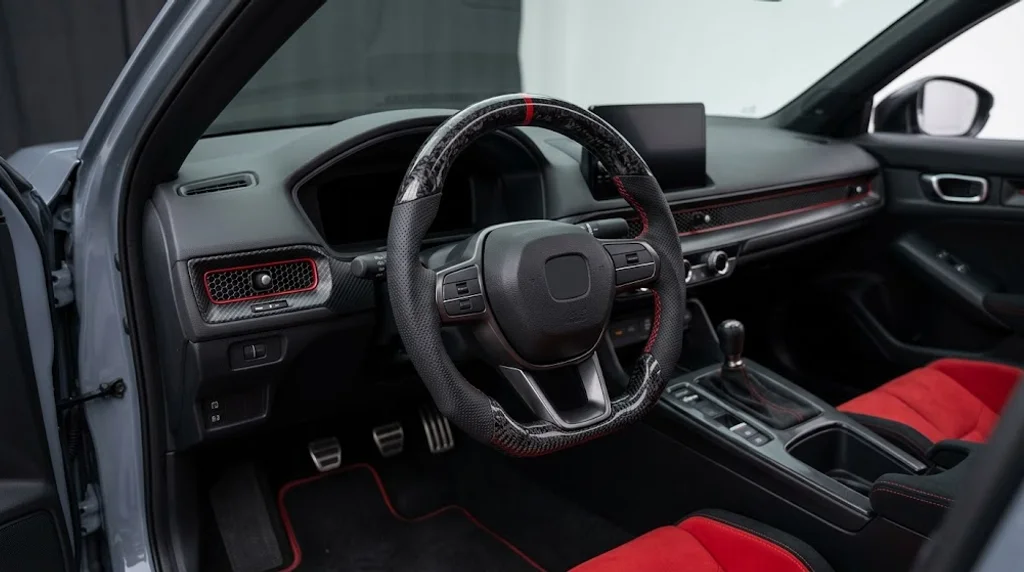
Note the Honda steering wheel measurement in whole millimetres, and write the date beside it. A second wheel for the same car will not need measuring again.
Recording the numbers properly is the part of a Honda how to measure a steering wheel exercise that people rush. Write them down rather than photographing the tape. Keep a copy in the car as well, so a future owner has them. A photograph of a tape measure is surprisingly hard to read, and a mistyped figure is worse than no figure at all.
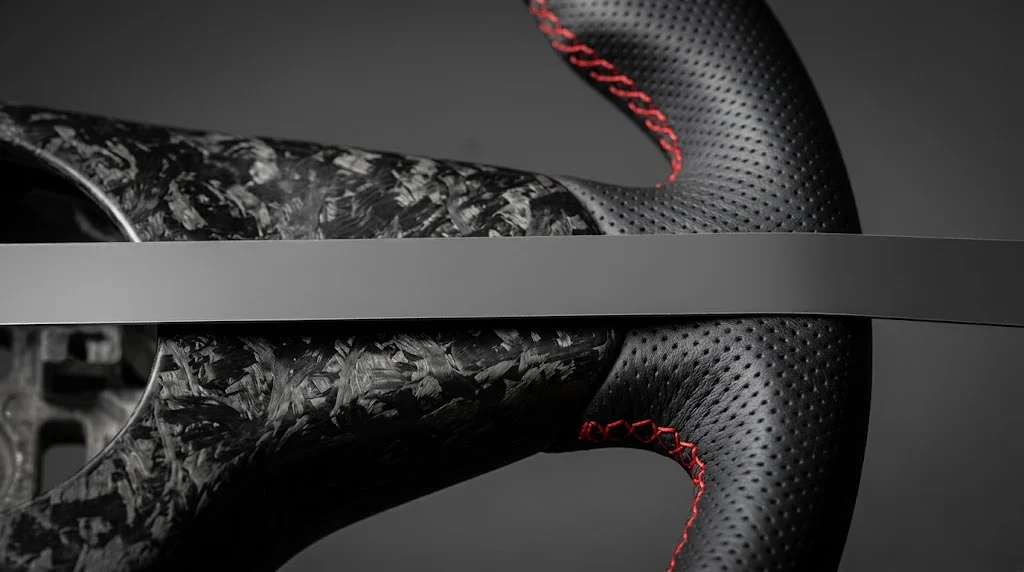
Once the new wheel arrives, an airbag sits in the middle of the job. Give the work to someone qualified. Isolate the battery and let the car sleep fully before loosening fasteners. Follow Honda procedure for your chassis rather than a general guide found online. Set the module on something soft, and tighten the centre fastener to the figure in the workshop manual. No other source should be used for it.
Once fitted, drive briefly and check the wheel is straight. Try every button, then any paddles, then the horn. Should a lamp stay on, have the car scanned before more driving.
Warranty concerns follow any change to the wheel. An aftermarket steering wheel does not automatically void a vehicle warranty under U.S. federal warranty law, but warranty coverage can still depend on whether the modification caused the specific failure being claimed.
Measurement settles the physical fit, and coding settles the electronics. Where the factory module, the wiring and the vehicle-specific parts are reused, further coding may not be needed. A module taken from another generation changes matters, and the control unit may then have to learn what is present.
Because that varies between cars, we treat coding as a possible step rather than a certainty. Send the chassis number with images of both modules and we will advise on the coding step.
Most problems trace back to a gap in the measurements. A wheel ordered without the rim thickness goes out to the wrong grip size. A hub depth taken by eye produces a wheel that sits too close or too far from the column. A rear photograph taken at an angle hides the locating features, and the connector then fails to mate.
A fifth problem is simply an incomplete submission. Sending two of the three figures usually means another round of messages before a quote can be issued. The last point is worth repeating, because a Honda how to measure a steering wheel package without a square-on rear photograph is incomplete. One extra frame saves a second build.
Diameter and rim thickness can be taken in place. The hub depth and the spline need the airbag out, so have a technician do that part.
No. A soft tape measure and a steady hand are enough for the figures we ask for.
Give us both readings. A small difference is normal on a used wheel, and a large one tells us the rim is distorted and should be examined.
Yes. They are recorded with the order, so a second wheel for the same car needs no new measurements.
You can, but millimetres avoid conversion errors, and our workshop works in metric throughout.
Only for a donor build. A newly made core leaves your factory wheel with you.
Building the wheel takes ten to fifteen working days; shipping adds fifteen to twenty. That makes the total twenty-five to thirty-five days.
Rims are cut, stitched and assembled in our own Guangzhou workshop. Thirteen or more years of design and production experience sit behind the catalogue patterns, and nothing starts before an order arrives. Measurements, material and stitch are your decisions; each one is checked against your chassis before the first cut. Every order ships tracked worldwide with a three-year warranty and thirty days for returns via an RMA request.
Our paddle shifter upgrade guide covers the other change Honda owners ask about most, and it explains which models have paddles at all. The Civic Type R FK8 and FL5 guide covers the manual cars in detail. The full range sits in the shop, and the Honda pages are Honda fitment, the Accord listing and the Civic Type R page.
Send the three figures, the two photographs and the chassis number together, and we will confirm the build. Nothing is cut until your Honda how to measure a steering wheel package is complete. We ask for the full Honda steering wheel measurement rather than a single figure. Two catalogue entries cover the rims we build for these cars. The first is the gloss carbon wheel for the Civic and CR-V. The second is the forged carbon wheel for the CR-V and Jade.
Plenty more reading exists if you want it. The installation guide covers the battery and airbag sequence, and the FAQ gathers what owners ask us most. Fitment and shipping questions go through the inquiry form or the contact page. Lead times appear in the shipping policy, and returns sit under the return and refund policy. American warranty law is explained by the Magnuson-Moss Warranty Act (15 U.S.C. §2304), and air bag safety guidance comes from NHTSA.
A modified Honda does not lose its warranty as a whole. Here is how the causation test works, what a dealer can still ask, and how to keep a claim on the record.
Read More →How a heated steering wheel retrofit works on a Honda Civic, CR-V or Accord: what the upgrade adds, fitment checks and how to test the heater afterwards.
Read More →How a flat bottom and a round rim differ on a Honda: which shape suits a Civic Type R, a daily Civic, an Accord or a CR-V, and what changes at the wheel.
Read More →